The Art of Becoming
Best Abstract Painting / Artist Of The Year
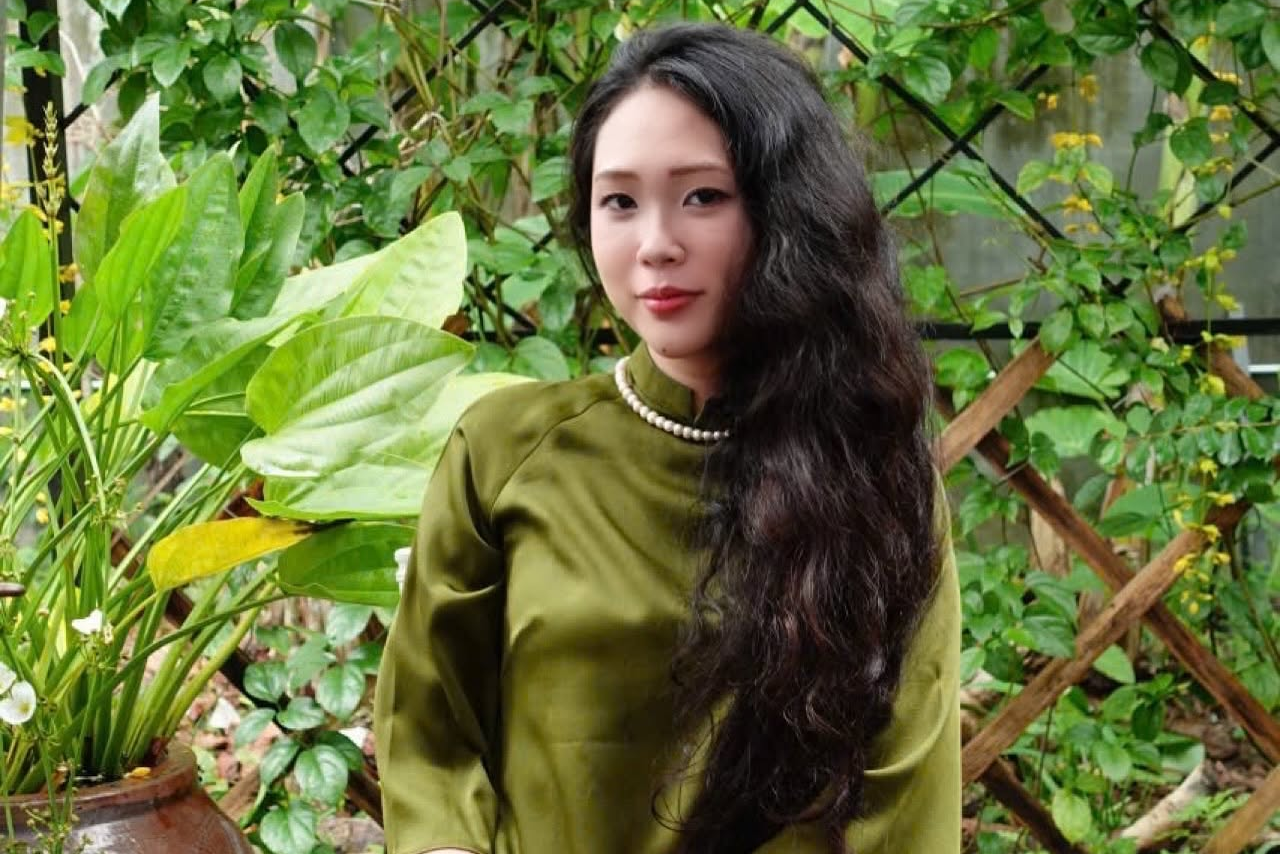
For Vo Huynh Chau Trinh, art is a way to ask difficult questions about identity, freedom and existence. Trained at Ho Chi Minh City University of Fine Arts, the visual artist works mainly with painting, mixed materials and installation-based approaches. Her practice is direct, emotional and philosophical, shaped by a desire to understand how the self is formed, broken and rebuilt over time.
At the centre of her work is the human body, but never as a complete or ideal form. Instead, the body appears fragmented, shifting and uncertain. Flesh tones, deep reds, purples and flashes of green move across the canvas, suggesting states of change rather than fixed identity. For Chau Trinh, the self is not something stable. It is a continuous process of becoming.
Her painting style is raw and instinctive. She often works with strong speed and physical energy, allowing emotion to guide the movement of paint. Brushstrokes collide, forms dissolve and colours push against one another. This intensity gives her work a sense of urgency, as if the painting is happening in the moment, between control and release.
Yet behind this visual force is a clear inner search. Chau Trinh is interested in the tension between the finite body and the desire for something larger: freedom, meaning, transformation. Her works do not try to offer simple answers. They open a space for viewers to face their own questions: Who am I? What shapes me? What must be broken before something new can begin?
In her 2025 series The Infinite within the Finite, she explores the human condition as a state of transition. Inspired by existential thought, the series looks at suffering, rupture and self-overcoming. Works such as Beyond the Shadows, Love and Suffering, Together in Pain and Through the Storm of Life present the body as a place where emotion and experience are constantly being formed.
Her 2026 project Ultimately, The Void moves further into abstraction. In this series, the body is no longer clearly defined. It becomes a field of movement, pressure and transformation. Paintings such as Dissolution, Frenzy, Venus Emerging from the Abyss and Rite of Dissolution No. 2 suggest that emptiness is not only an ending. It can also be a beginning, a space where old forms disappear and a new self becomes possible.
Chau Trinh also expands her practice through material experimentation. In Birth, Dwelling, Decay, Dissolution, she uses grout, oil colour, silver leaf, iron and zinc structures on canvas. These construction materials bring weight, tension and physical presence to the work. Against rough surfaces and fractured forms, silver leaf appears as a quiet sign of light, suggesting beauty and renewal within rupture.
Her art is also shaped by personal memory, displacement and the pressures placed on the female self. However, she does not turn these experiences into private confession alone. She transforms them into broader reflections on belonging, solitude and human freedom.
Vo Huynh Chau Trinh’s work is powerful because it refuses stillness. Her paintings move, collapse, rebuild and question. Through the body, colour and material, she creates a visual language of becoming, one that invites viewers to stand before uncertainty and imagine the possibility of transformation.