Where Colour Holds a Feeling
Best Drawing Art
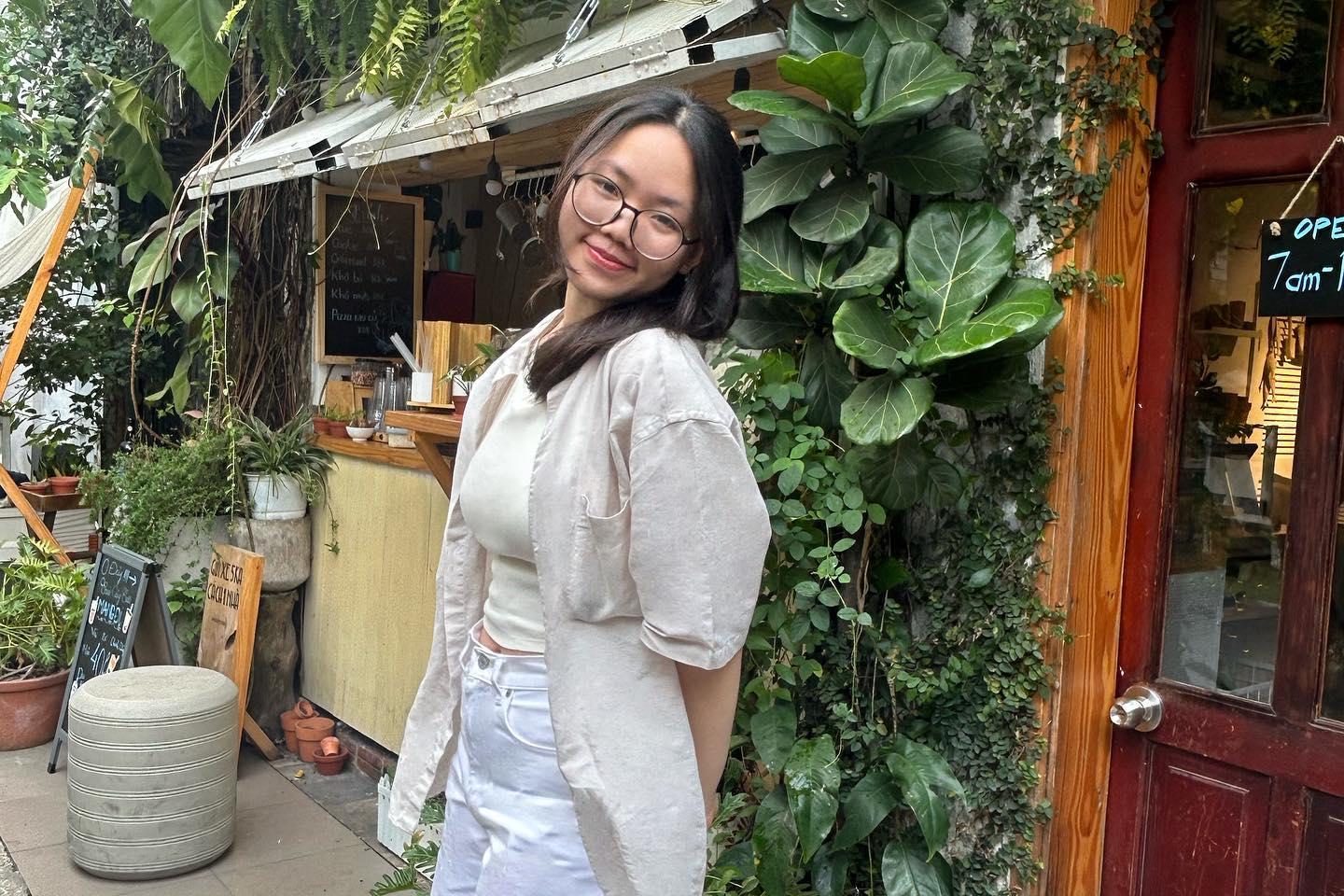
For Tăng Phương Hồng Nhung, painting is a way of holding on to the beauty found in everyday life. Through luminous landscapes, intimate portraits and quiet moments of observation, the young Vietnamese artist transforms colour into a deeply personal language, revealing the poetry of nature, people and the fleeting atmosphere that surrounds them.
Some moments linger long after they have passed.
Sunlight filtering through a canopy of trees. Fishing boats resting quietly along the shore. The contemplative gaze of an elderly man beside an offering table. The gentle embrace of a child holding a favourite teddy bear. These are the quiet encounters that continually draw Tăng Phương Hồng Nhung back to the canvas, where observation becomes colour and familiar scenes are transformed into intimate reflections on the world around her.
Currently studying oil painting at the Ho Chi Minh City University of Fine Arts, Nhung belongs to a young generation of Vietnamese artists still shaping their visual language. Yet even at this early stage, her work reveals a clear sensitivity towards colour, nature and the emotional life of everyday scenes. She does not approach painting simply as a means of reproducing what stands before her. Instead, she uses the visible world as a starting point for expressing how a place or person makes her feel.
Inspired by Impressionism, Nhung is especially drawn to the changing character of light. Her brushwork is free and responsive, while colour carries much of the emotional weight. Deep blues and greens suggest the mystery and coolness of a forest stream. Pale pinks, creams and softened earth tones create a gentle world of childhood. Warm reds, oranges and golds slow the atmosphere, bringing a sense of ritual, reflection and quiet gravity.
In Suối Xanh, a large oil painting completed in 2024, layers of turquoise, cobalt and green immerse the viewer in a secluded corner of nature. The scene is less concerned with botanical precision than with the sensation of entering a cool, hidden place where water, foliage and light seem to dissolve into one another. For Nhung, nature becomes both subject and refuge, a space through which she explores the connection between the inner self and the world outside.
Her portrait Em Họ, created in 2026, reveals another side of her practice. A young girl embraces a large teddy bear within a field of soft pastel colour. The composition recalls the tenderness of childhood, when familiar toys could hold entire worlds of affection and reassurance. Rather than treating innocence sentimentally, Nhung allows the restrained gesture and delicate palette to evoke attachment, trust and the fragile clarity of early memory.
The emotional range of her work extends beyond childhood. In Vu Lan, the seated figure of an elderly man is surrounded by saturated reds and glowing yellow offerings. Time seems to pause within the scene. The painting carries the stillness of remembrance and the subdued weight of ritual, transforming a familiar cultural setting into an intimate reflection on age, devotion and the passage of time.
In Chùa Vạn Phật, Nhung gathers a group of monastics around a ceremonial object, using warm colour and open brushwork to suggest compassion, spiritual calm and communal presence. The figures are not rendered with rigid detail. Instead, they emerge through colour and rhythm, allowing the atmosphere of the gathering to become as important as the individuals themselves.
Her plein air studies show a more immediate and exploratory energy. Works such as Dốc Nhà, Róc Rách, Suối Rừng, Xanh, Xưởng Mụi and Ụ Đóng Tàu capture gardens, waterways, forest interiors and working boats through rapid, expressive fields of gouache. These smaller paintings reveal her fascination with changing light, local landscapes and the visual character of ordinary places. A hillside, a cluster of trees or a shipyard under the midday sun becomes an opportunity to explore how temperature, rhythm and colour can reshape perception.
Boats and water appear repeatedly throughout her portfolio. In Những Chiếc Thuyền and Hoàng Hôn, vessels seem suspended within calm surfaces, carrying a sense of movement even while remaining still. The water reflects not only the surrounding landscape but the passing of time itself. Through muted colours and softened forms, Nhung creates images that feel less like fixed locations than moments remembered after they have already begun to fade.
Alongside her studies, she has participated in several group exhibitions, including Sắc Xuân Màu Nhớ, Hương Sắc Tháng Ba, Mekong Art, Dệt Sắc Màu Xuân, student fine arts exhibitions and sketching showcases. She has also taken part in the Hàng Mã project and received first prize in the Thương competition organised by FPT Arena. These experiences mark the beginning of a practice that continues to grow through observation, experimentation and personal reflection.
What gives Nhung’s work its appeal is not technical display alone, but her willingness to remain close to feeling. She allows colours to remain tender, brushstrokes to stay visible and familiar subjects to carry emotional complexity. In her paintings, nature is never merely scenery, and people are never simply figures within a composition. Each becomes part of a larger inner landscape shaped by affection, stillness and remembrance.
For Tăng Phương Hồng Nhung, painting is a way of holding on to what might otherwise pass unnoticed. Through colour, she preserves a changing light, a childhood bond, a moment of spiritual calm or the quiet presence of someone waiting beside the everyday world.