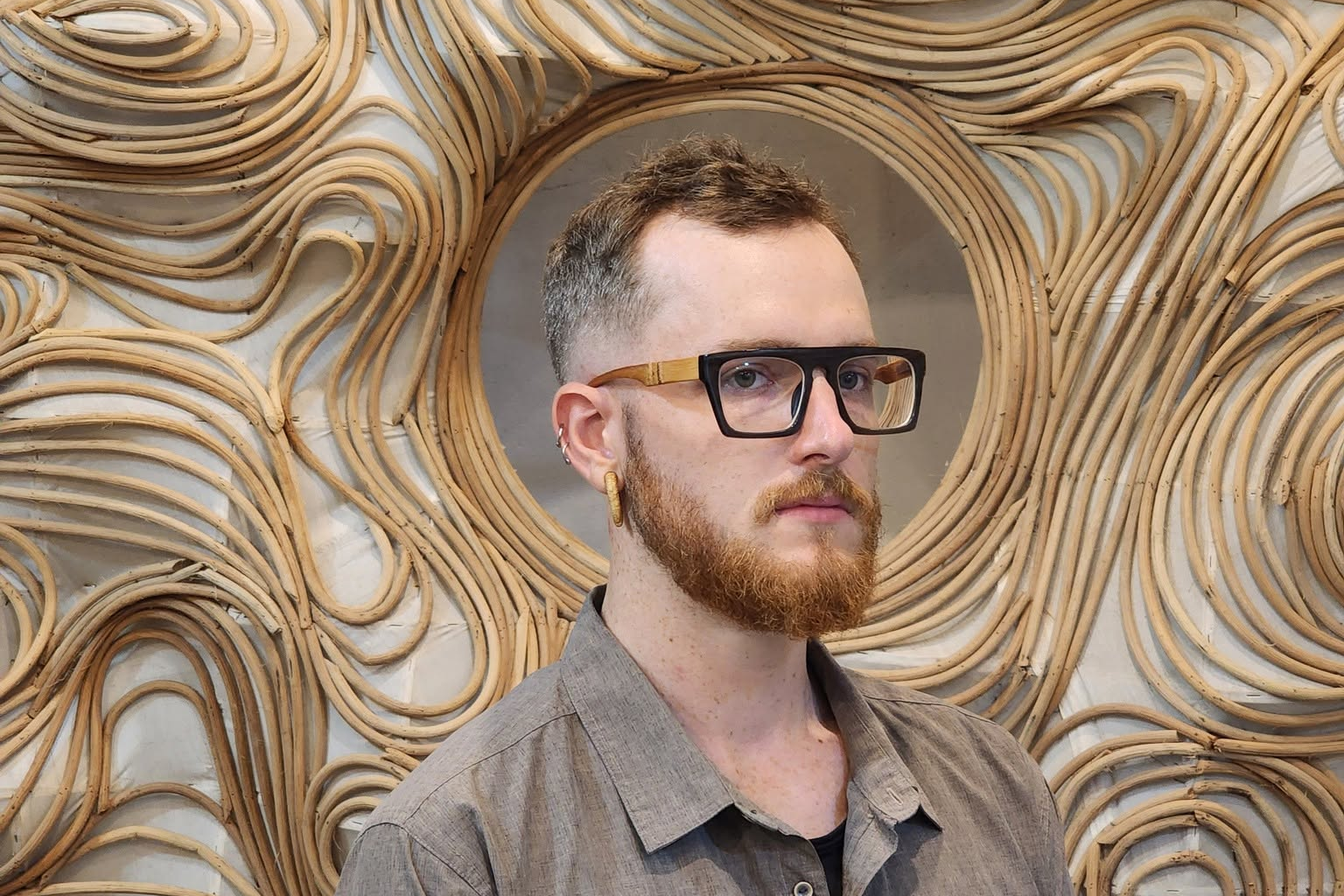
Where Nature Becomes Form
Natural Materials Art / Sustainability Art & Design
Working between sculpture, architecture and traditional craftsmanship, Nathaniel Holland transforms Vietnam’s natural materials into immersive contemporary installations. Through close collaboration with local artisans, bamboo, rattan and hemp become living mediums bridging heritage and innovation while revealing the timeless beauty of making by hand.
For Nathaniel Holland, every material carries a memory.
The quiet strength of bamboo, the supple rhythm of rattan and the delicate weave of hemp are more than natural resources—they are the result of generations of knowledge, shaped by landscape, climate and human hands. Long before they become sculpture or architecture, these materials have already lived a story. Holland’s practice begins by understanding that story.
Based in Hanoi, the American installation artist and sculptor has established a distinctive creative practice that exists between contemporary art, architecture and traditional craftsmanship. His large-scale installations and spatial environments are not conceived as objects placed within a space; they are experiences that invite visitors to slow down, move through them and reconnect with the natural world through material, light and form.
At the centre of his work lies a deep collaboration with Vietnam’s traditional craft communities. Rather than viewing artisans as fabricators, Holland sees them as creative partners whose inherited knowledge forms the foundation of every project. His process begins in bamboo forests, weaving workshops and rural craft villages, where generations of expertise continue to shape the harvesting, preparation and transformation of natural materials.
“We must intimately understand traditional techniques refined over generations to genuinely develop modern design methods with natural materials,” Holland says.
It is a philosophy that defines his entire practice. Every project grows from dialogue rather than prescription, allowing the qualities of the material—and the people who know it best to guide the final outcome. Instead of forcing natural elements into contemporary design, Holland allows their character to shape the architecture itself.
This approach gives his work a remarkable sense of lightness. Bamboo curves rather than resists. Woven hemp filters light with quiet softness. Structural forms appear almost weightless, responding naturally to gravity, wind and movement. His installations seem less constructed than grown, blurring the boundary between architecture, sculpture and landscape.
Working across vastly different scales, Holland moves comfortably from intimate lighting pieces to monumental pavilions and immersive architectural environments. Whether temporary or permanent, every project reflects the same careful consideration of material efficiency, fabrication and assembly. Traditional craftsmanship is paired with contemporary engineering and digital design, creating works that feel both timeless and unmistakably contemporary.
For Holland, sustainability is not simply an environmental objective it is a philosophy of making. It begins with renewable materials and responsible sourcing, but extends equally to preserving cultural knowledge, supporting local craftsmanship and demonstrating that vernacular building traditions remain profoundly relevant in contemporary design. His installations propose a future where innovation is measured not only by new technologies, but by how intelligently we reinterpret the wisdom already around us.
That vision has brought his work to an international audience. In 2026, Holland exhibited at Milan Design Week, presenting a sculptural light installation created from engineered Vietnamese bamboo timber and hemp fabric. The project celebrated the remarkable potential of Vietnamese craftsmanship on one of the world’s most influential design stages, proving that regional materials and traditional techniques can speak confidently within a global contemporary design language.
Among his recent projects are the Soop Pavilion for Air House Korea, the Good Time Vietnam bamboo façade installation series, the modular Ziggurat Pavilion, and a series of large-scale environmental sculptures developed with Equation Vietnam. Across every commission, the ambition remains unchanged: to transform natural materials into immersive experiences that encourage new ways of seeing, inhabiting and connecting with space.
Educated at the Maryland Institute College of Art (MICA), Holland combines artistic research with architectural thinking and an enduring commitment to collaboration. His work is not about preserving tradition as nostalgia, but allowing it to evolve. Each installation becomes a conversation between artisan and artist, between heritage and innovation, between nature and contemporary design.
For Nathaniel Holland, the future is not built by leaving tradition behind. It is shaped by returning to it—with curiosity, humility and imagination. In his hands, bamboo is no longer simply a building material, nor hemp merely a fibre. Together, they become architecture, sculpture and poetry—living expressions of a culture that continues to grow, adapt and inspire.